


Rest is part of the plan
Short blocks of exercise with planned breaks, so you leave with energy for the rest of your day.
Exercise physiologist for motor neurone disease in Sydney
Gentle, paced exercise to help you stay comfortable and keep doing what matters, with adjustments as your needs change.
Living with MND can make energy precious. We start with what you want to keep doing, like getting to the garden or managing your morning routine. Then we plan exercise that supports that goal without leaving you exhausted.
We work alongside your neurologist and MND care team. Your family or carers can join in whenever you would like.
A free 15-minute call about your goals and whether we can help. It's a conversation, not an assessment.
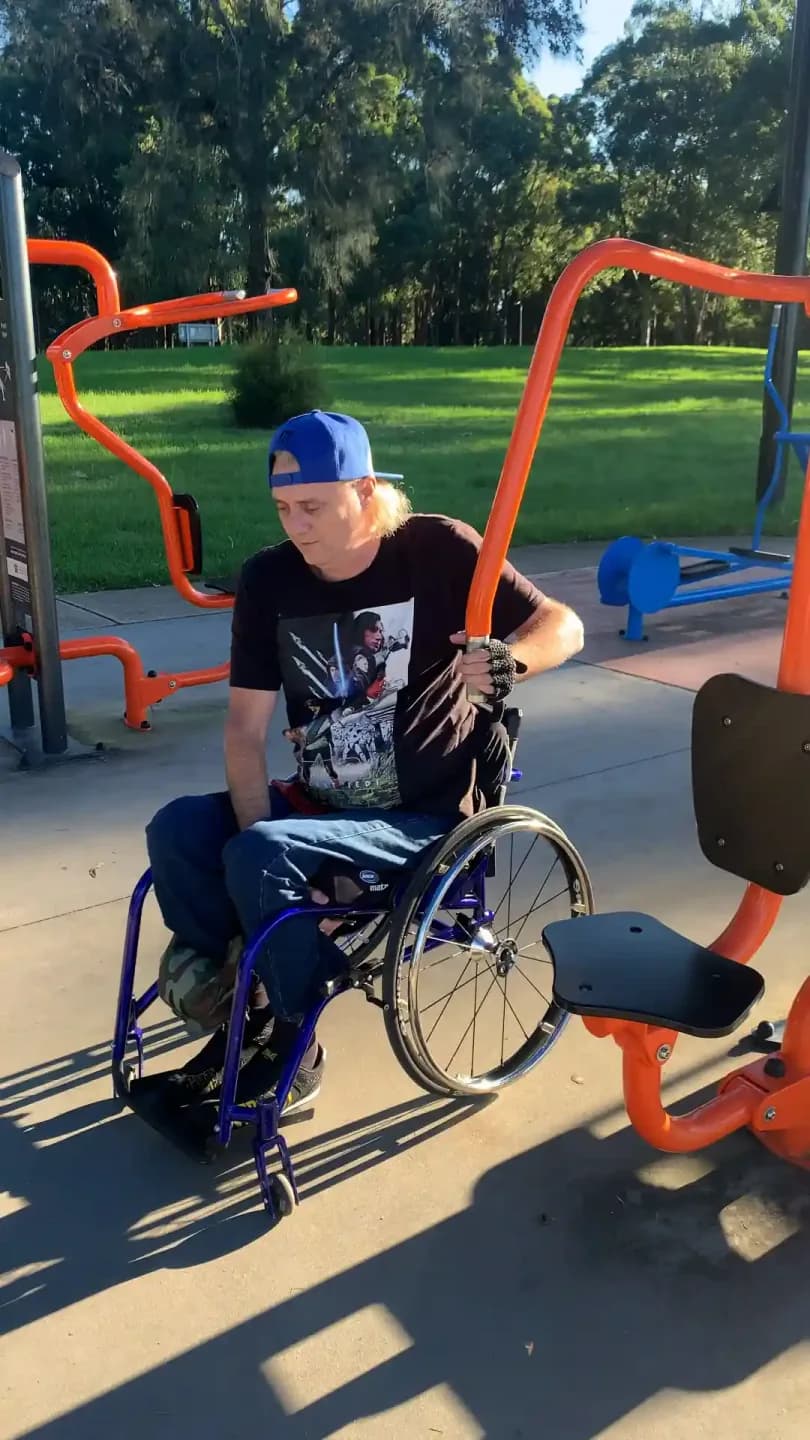

Sessions are planned around fatigue, with rest built in.

Sydney families have worked with our exercise physiologists and physiotherapists.

We come to you and bring the equipment.
Exercise will not cure MND or strengthen muscles that MND has already weakened. What exercise can do is help you use the strength and movement you have for the activities that matter most. You choose the focus, and it can change over time.
Gentle stretching and range-of-movement work that may ease stiffness and make sitting or resting more comfortable.
Keeping up the parts of your day you want to do yourself, like getting dressed, moving from bed to chair or walking to the letterbox.

Low to moderate exercise, like a stationary bike or light strength work, set within limits that suit you.

Saving energy for the outing, the visit or the family event that matters, and planning exercise around it.
Fatigue is common with MND, and pushing through it rarely helps. We plan each session around your energy that day, keep the intensity sensible and finish before you are spent. As your needs change, we adjust the exercises, goals and support.

Short blocks of exercise with planned breaks, so you leave with energy for the rest of your day.

We ask how you slept, how yesterday went and how you feel right now, then adjust the session before we start.

Exercise you do yourself, movement we help you with, or gentle stretches we guide, depending on what suits you at the time.

We review goals regularly. Over time the focus may move from building a routine to staying comfortable and doing what you enjoy.
Exercise physiology is one part of your care. Here is how we work alongside the people already supporting you.
They lead your medical care. With your consent, we share what we're working on and follow their advice about exercise and safety.
Your physiotherapist may lead breathing and positioning work, and your occupational therapist equipment and home set-up. We plan exercise to fit around theirs.
You decide who's involved. We can show a partner, family member or support worker how to help with exercises safely, and when to stop.
Your state MND association and MND Australia (1800 777 175) offer information and support for you and the people close to you.
You don't need a GP referral. You, a family member, support worker or support coordinator can get in touch. We'll reply within 2 business days. Then we'll work through the plan with you, one visit at a time.

You tell us what you want to keep doing and what's getting harder. We look at your strength, movement, fatigue and the support you have around you.

We plan gentle exercise within limits that suit you and practise it together, with family or carers involved if you'd like.
We check how you're going every visit, update the plan when your needs shift and, with your consent, keep your care team informed.
With MND, more is not better. We avoid exercise that leaves you exhausted, sore or breathless for long afterwards, and we watch closely for fatigue. If something changes, like new trouble breathing, choking or swallowing problems, a fall or a fast change in your strength, we stop and ask you to contact your neurologist, GP or MND team. In an emergency, call 000.
Exercise physiology doesn't treat MND or replace your medical team, physiotherapist or occupational therapist. Before you start, it helps to share:
 Your diagnosis, medicines and any advice from your neurologist about exerciseAny breathing, swallowing or cramping concernsHow fatigue affects your days, and your best time of dayMobility aids, splints or equipment you use, and how you transferAny falls or near misses in the past few monthsWho supports you day to day, and who you'd like involved
Drift Health has served Sydney for more than 8 years, and over 130 families have worked with our exercise physiologists and physiotherapists.
When you're living with MND, that experience should show up as patience: careful, paced exercise, honest talk about what it can and can't do, and a clinician who keeps listening as things change.

Home sessions save the energy that travel and waiting rooms take, and your own chair and bed are close by if you need a rest. We bring the equipment. If you'd like to get outside, a nearby park can work too, and if it rains we can move to a sheltered spot or your home.

Liverpool, Fairfield, Campbelltown and surrounding suburbs
Blacktown, Parramatta, Penrith and surrounding suburbs
Ashfield, Marrickville, Burwood and surrounding suburbs
Sydney CBD and nearby suburbs
Castle Hill, Kellyville and surrounding suburbs
Miranda, Cronulla, Sutherland and surrounding suburbs
A note from Victor
I'm Victor, Director and Head Exercise Physiologist at Drift Health. With MND, every bit of energy counts, and I want our sessions to protect it, not use it up.
We start by listening to what you want to keep doing, and to the people around you. Then we keep the plan gentle, honest and flexible, and change it whenever you need us to.
Exercise physiology may be funded when it meets NDIS criteria, relates to your disability support needs and fits your plan. We work with self-managed and plan-managed participants. Our fees are in line with NDIS price limits, travel is charged, and we'll explain the service and costs before you book paid sessions.
The NDIS describes maintenance therapy as support to keep your ability to do everyday tasks. It can be funded when it meets the criteria.
Let your support coordinator, plan manager or the NDIA know. We provide reports that describe what we've worked on and what has changed.
Drift Health isn't a registered NDIS provider, so NDIA-managed plans can't be used with us. Your plan manager can confirm what your plan allows.
Our exercise physiologists lead this work. Our physiotherapists are on the same team if pain, a joint problem or a change in how you move needs their input.

Victor
Director & Head Exercise Physiologist

Jennifer
Exercise Physiologist
Michel
Exercise Physiologist

Conan
Exercise Physiologist

Tony
Exercise Physiologist
Laura
Exercise Physiologist

Joey
Physiotherapist

Lucas
Physiotherapist

MND Australia suggests exercise can help people with MND stay active when a health professional who understands MND supervises it and keeps the exercise within your limits. We avoid pushing to exhaustion, plan rest into every session and check in about fatigue each visit. Your neurologist's advice comes first.
We can't promise that, and you should be wary of anyone who does. Exercise can't strengthen muscles MND has already weakened. We aim to help you stay comfortable, use the strength you have and keep doing what matters to you. Your neurologist is the best person to ask about how MND may progress for you.
Tell us. We can make the session gentler, switch to stretching and comfort work, or talk through how things are going. We plan around fatigue rather than push through it.
Yes, if you'd like them there. We can show them how to help with exercises safely between visits and which signs mean it's time to stop and rest. Decisions about your sessions stay with you.
With your consent, yes. We can share what we're working on and follow exercise advice from your neurologist, MND clinic, physiotherapist or occupational therapist. We don't replace any of them.
It may be funded if your plan is self-managed or plan-managed and exercise physiology fits your plan and goals. Drift Health isn't a registered NDIS provider, so NDIA-managed plans can't be used with us. We also see private clients.
Aged care may help if you cannot access the NDIS. In June 2026, the Government announced priority access to Support at Home for older Australians with MND. To apply, contact My Aged Care on 1800 200 422. Drift Health also works with Support at Home and private clients.
These pages cover related conditions and how our services work. If you're not sure which fits, a free call is a good place to start.
Tell us what you want to keep doing, how fatigue affects your day and who supports you. We can discuss whether exercise physiology is a good fit now and how sessions could work at home.
A free 15-minute call about your goals and whether we can help.