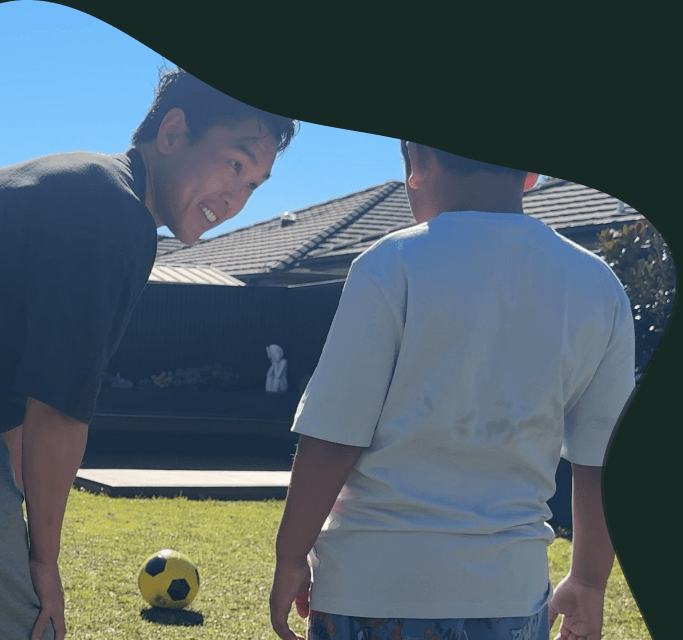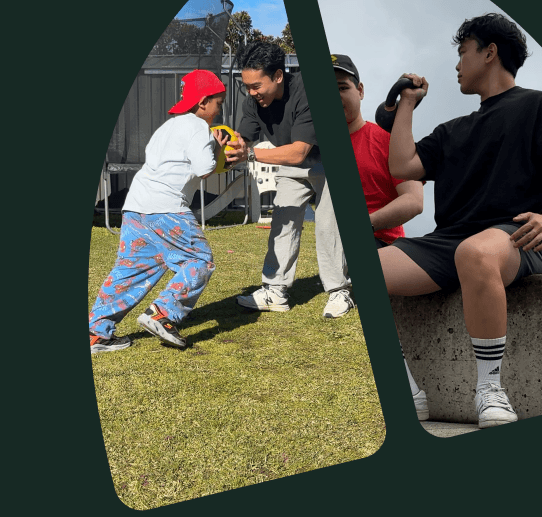


Stay with your child
Most children do better with a parent close by. If yours works better with a bit of room, we'll follow that.
Physiotherapy for children
Build mobility, balance and strength for play, getting around and everyday tasks.
Our physiotherapists come to your home or a local park. They work with your child, and with you, on the movements that feel tricky right now, using games your child actually wants to play.
A free 15-minute call about your child's movement and whether we can help.
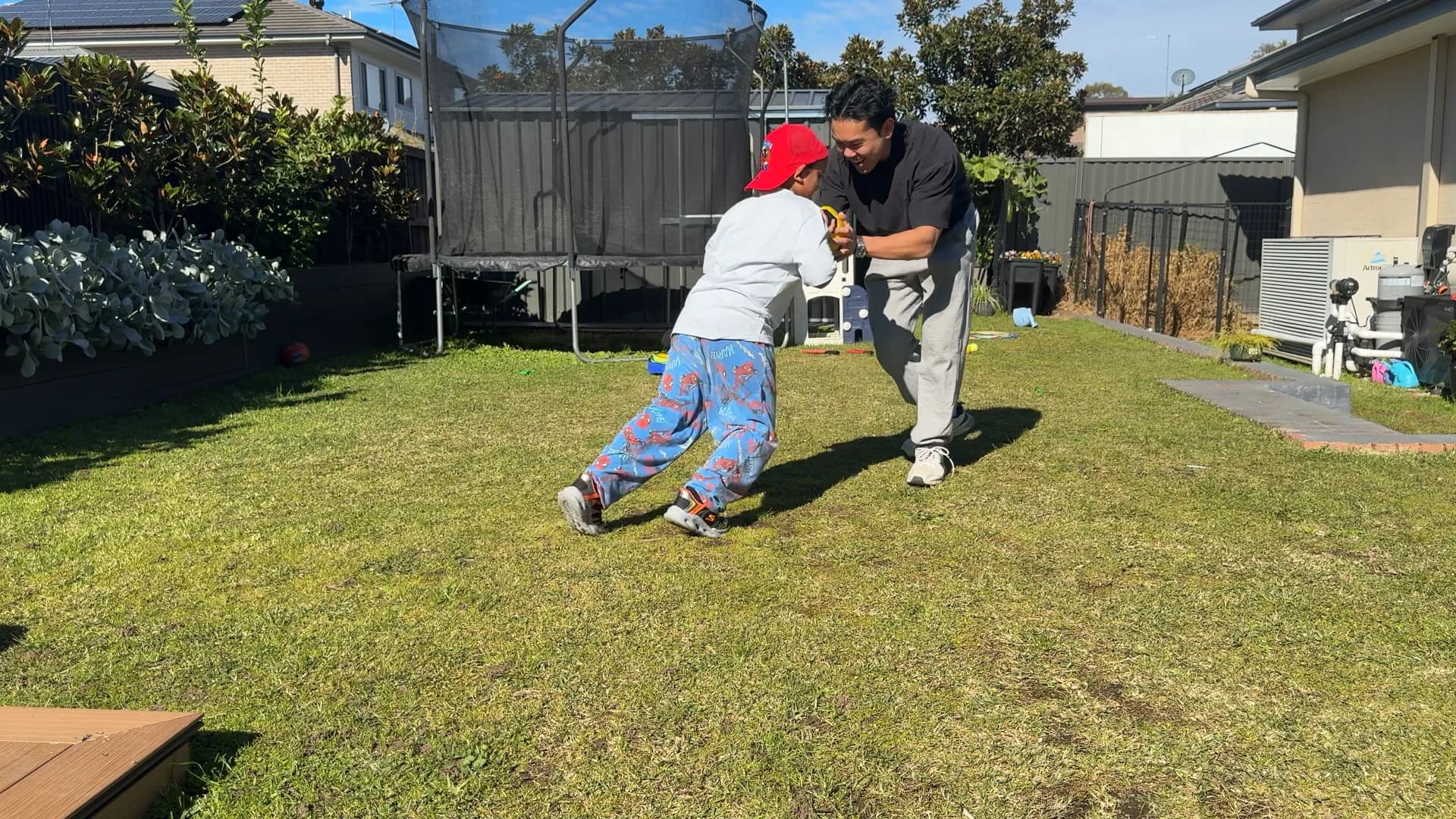

Physio at home or a local park, in a space your child already knows.

We learn how your child communicates before we ask them to move.
Stay in the session and learn what to practise at home.
You don't need to name a condition or work out why. Tell us what you've noticed and we'll take it from there.
If your child has lost a skill they used to have, or has new pain or a limp, see your GP, child and family health nurse or paediatrician first. Physio can then fit alongside the care they recommend.
 Keeping up on a walk, or often wanting to be carriedStairs: needing a hand or holding the railGetting up from the floor, a low seat or the carBalance on uneven ground, like grass, sand or a bumpy pathJoining in: kicking, hopping, climbing and playground games
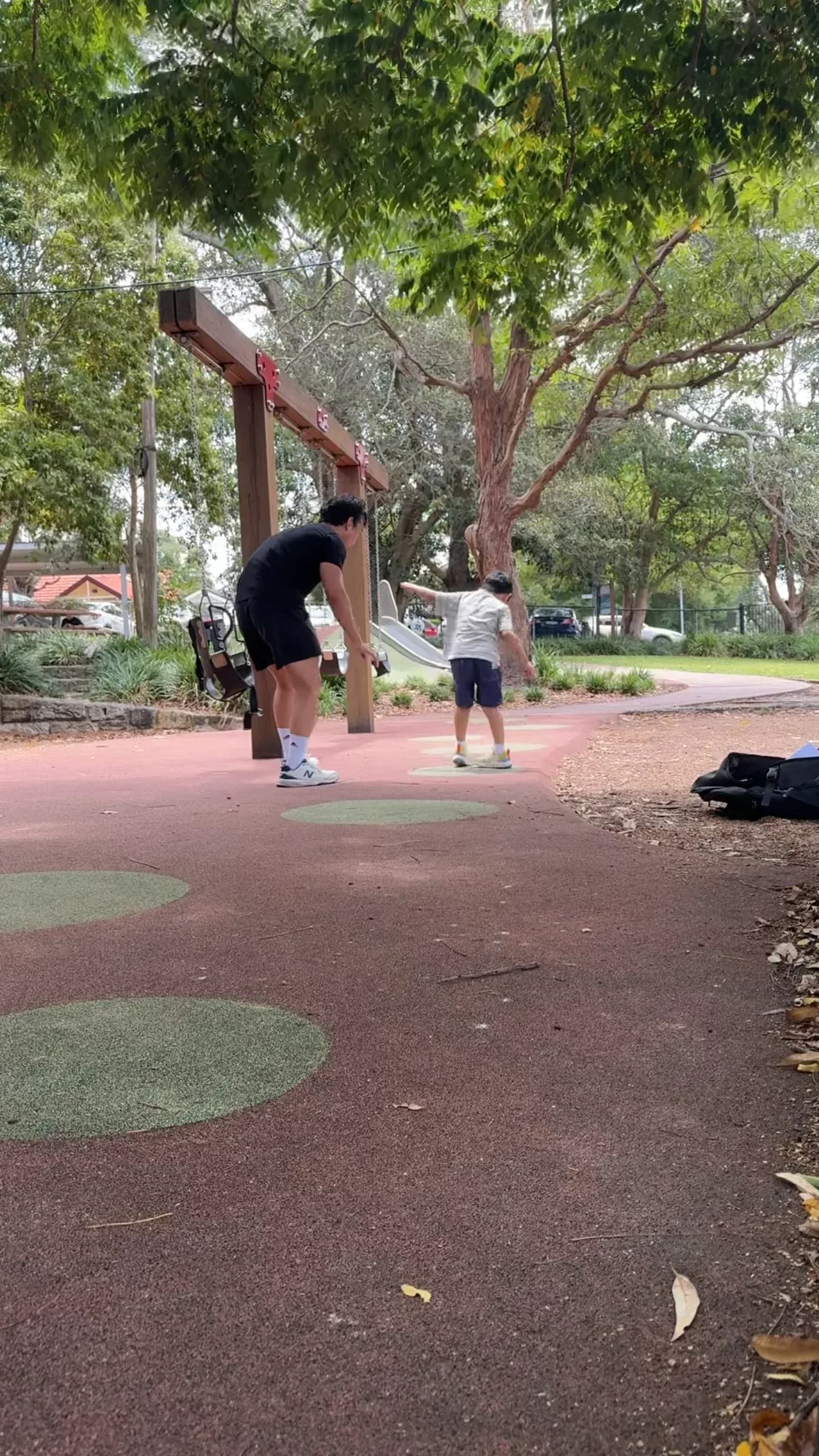
Each goal is tied to something your child does every day. Here's what that can look like.

Not just being on the team, but getting involved: chasing the ball, taking a turn and keeping up for the whole game or training session.

Running, jumping, hopping, climbing and stairs. The big movements behind getting around and joining in, with less need for a hand.

Catching, kicking, throwing and changing direction, so the timing comes together and playground games feel more doable.
Many families find us looking for a physio who understands autism. Our connection-first approach starts with getting to know your child: how they communicate, what interests them and what helps them feel comfortable.
That shapes how the session runs. Your physiotherapist can use visual cues, direct language and demonstrations, and give extra time to process, whether your child is verbal, limited-verbal or non-verbal. At home, there are no bright clinic lights or waiting rooms, and we introduce equipment gradually with breaks built in.
If your child loves trains, we might lay a track of cones to step along. The physio goal is balance; the reason to keep going is the train.
Autism therapy for kids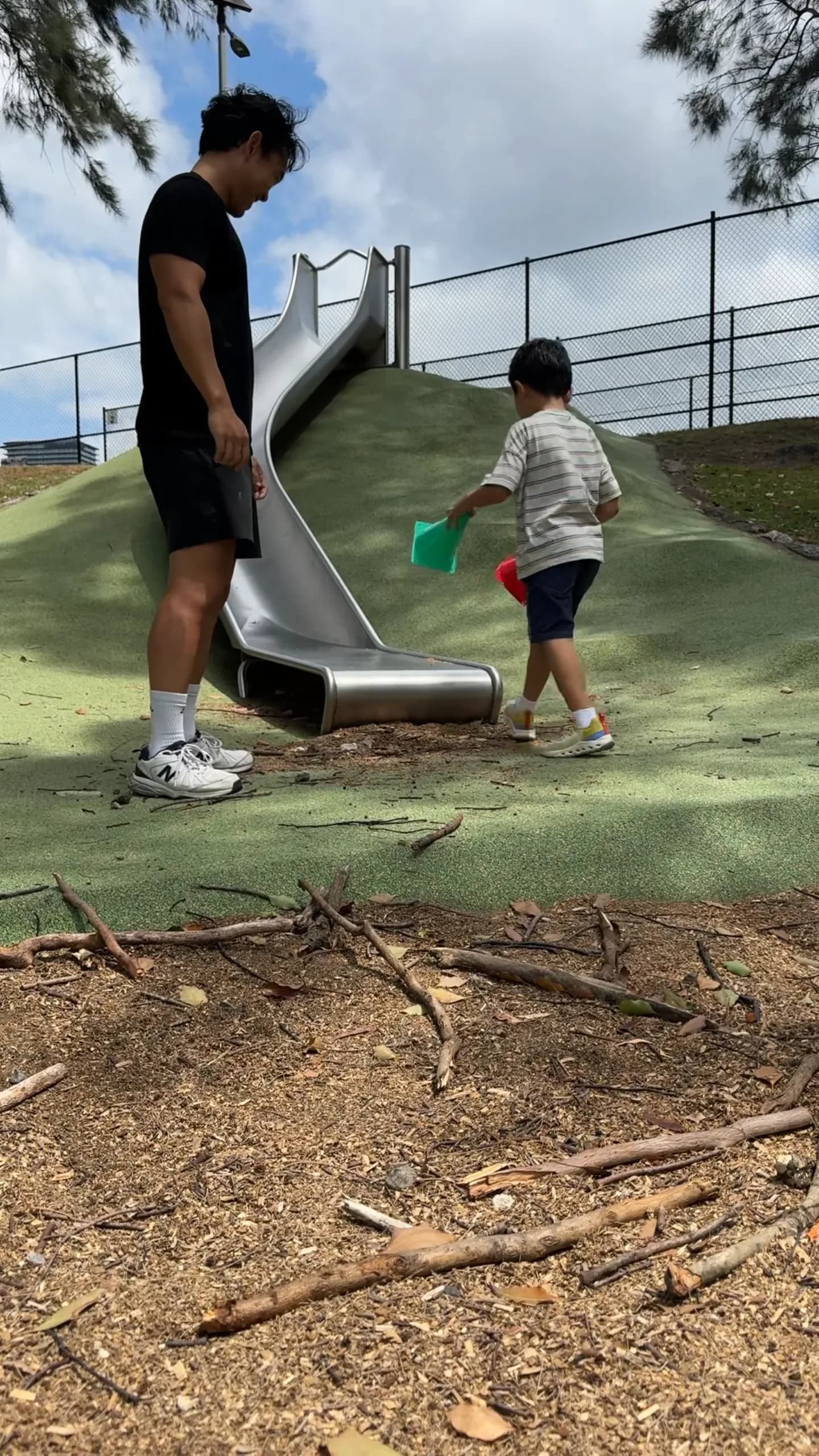
You know your child best, so you're part of the physio, not waiting outside it.
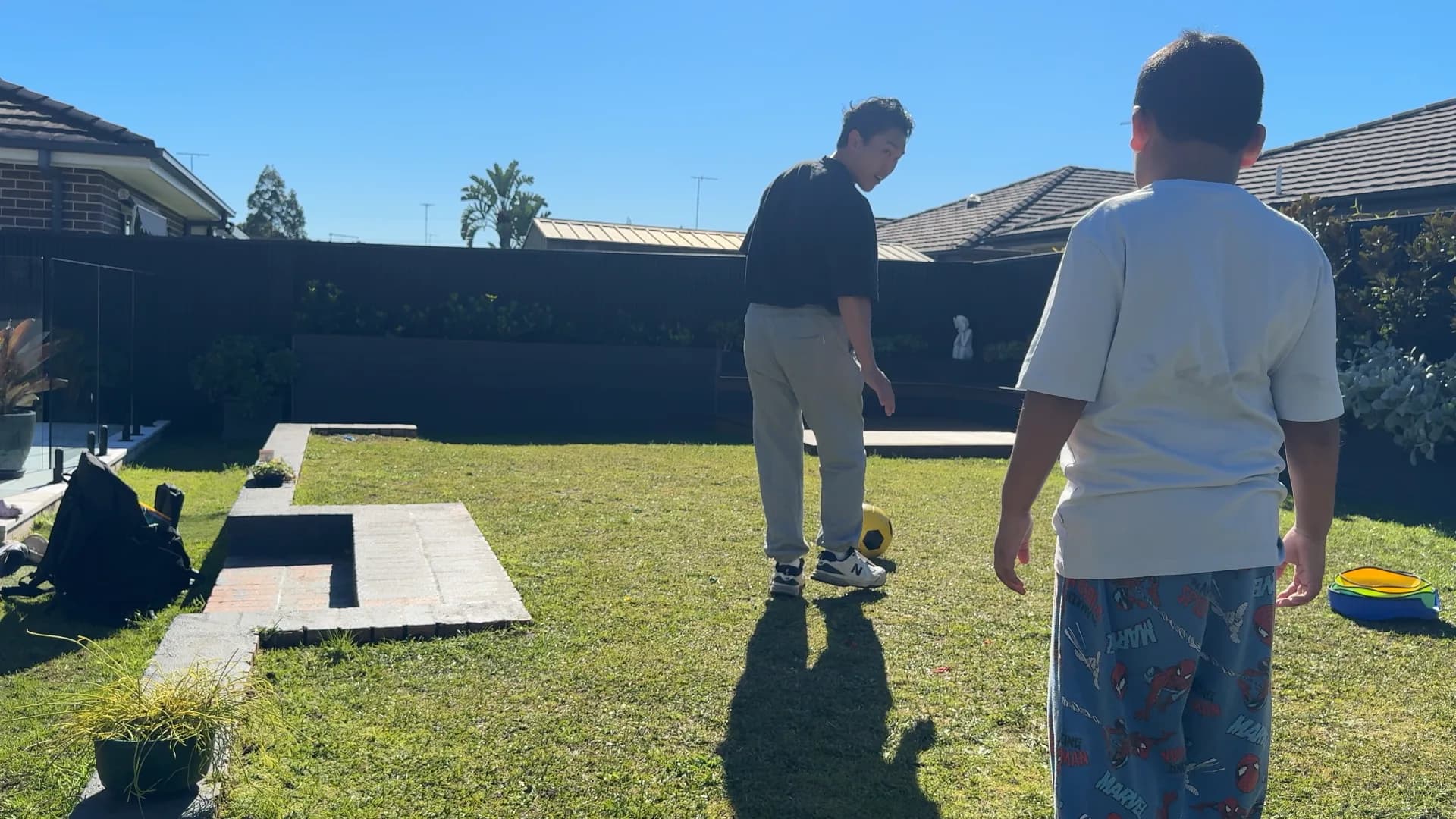
Most children do better with a parent close by. If yours works better with a bit of room, we'll follow that.
A few minutes built into things you already do, like stepping up the kerb on the walk to school, rather than a sheet of exercises.
Already seeing an OT, speech pathologist or exercise physiologist? We work alongside them so goals line up, and with your OK we keep your school and paediatrician in the loop.
If a session doesn't suit your child, say so. We'll change the activity, the pace or the plan.
We keep the process simple, so you always know what we're working on and why.

We hear what you've noticed, then watch your child move in a game they enjoy to work out which part of the task is tricky.

We shape a plan with you and practise it in games, adjusting the challenge so your child keeps succeeding.
We look at what's changed at the park, at school and at home, and choose the next goal together.
Our physiotherapists work with children and families, alongside our exercise physiologists. Read their profiles, then tell us what your child wants to do and what helps them take part.

Joey
Physiotherapist
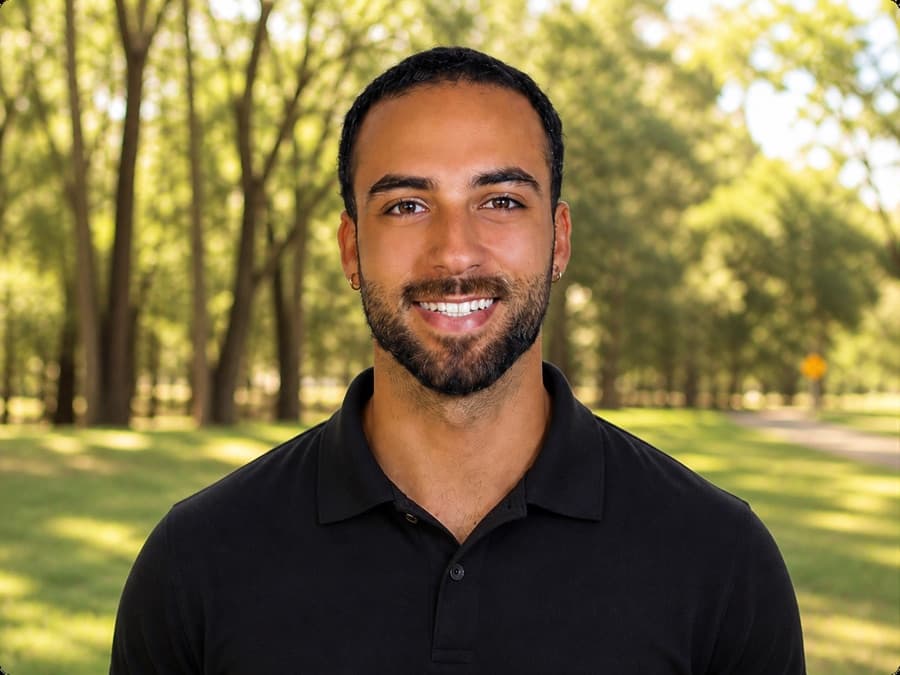
Lucas
Physiotherapist

Leo
Physiotherapist

Victor
Director & Head Exercise Physiologist

Jennifer
Exercise Physiologist
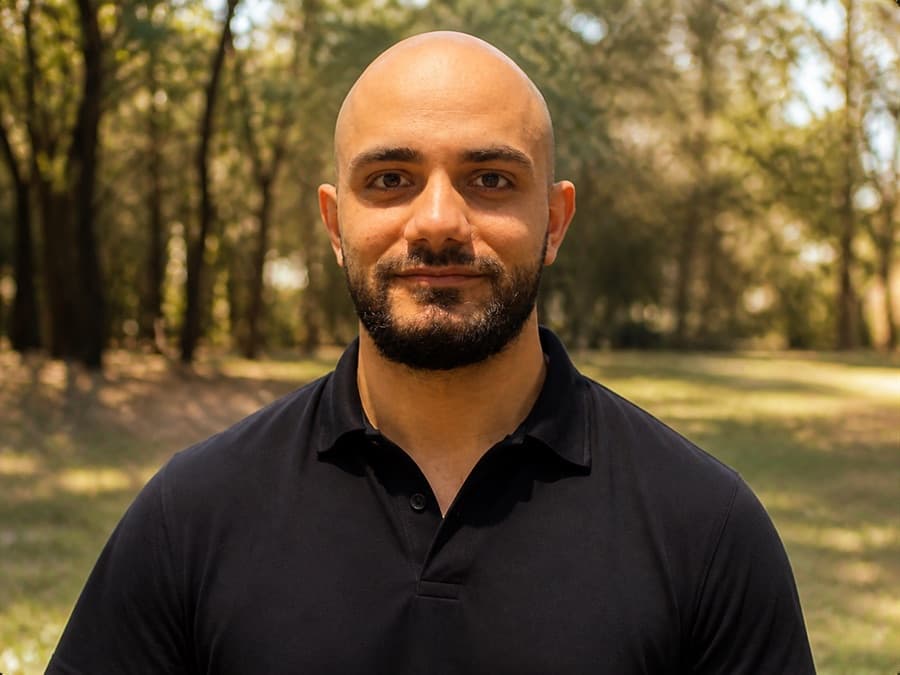
Michel
Exercise Physiologist

Conan
Exercise Physiologist

Tony
Exercise Physiologist
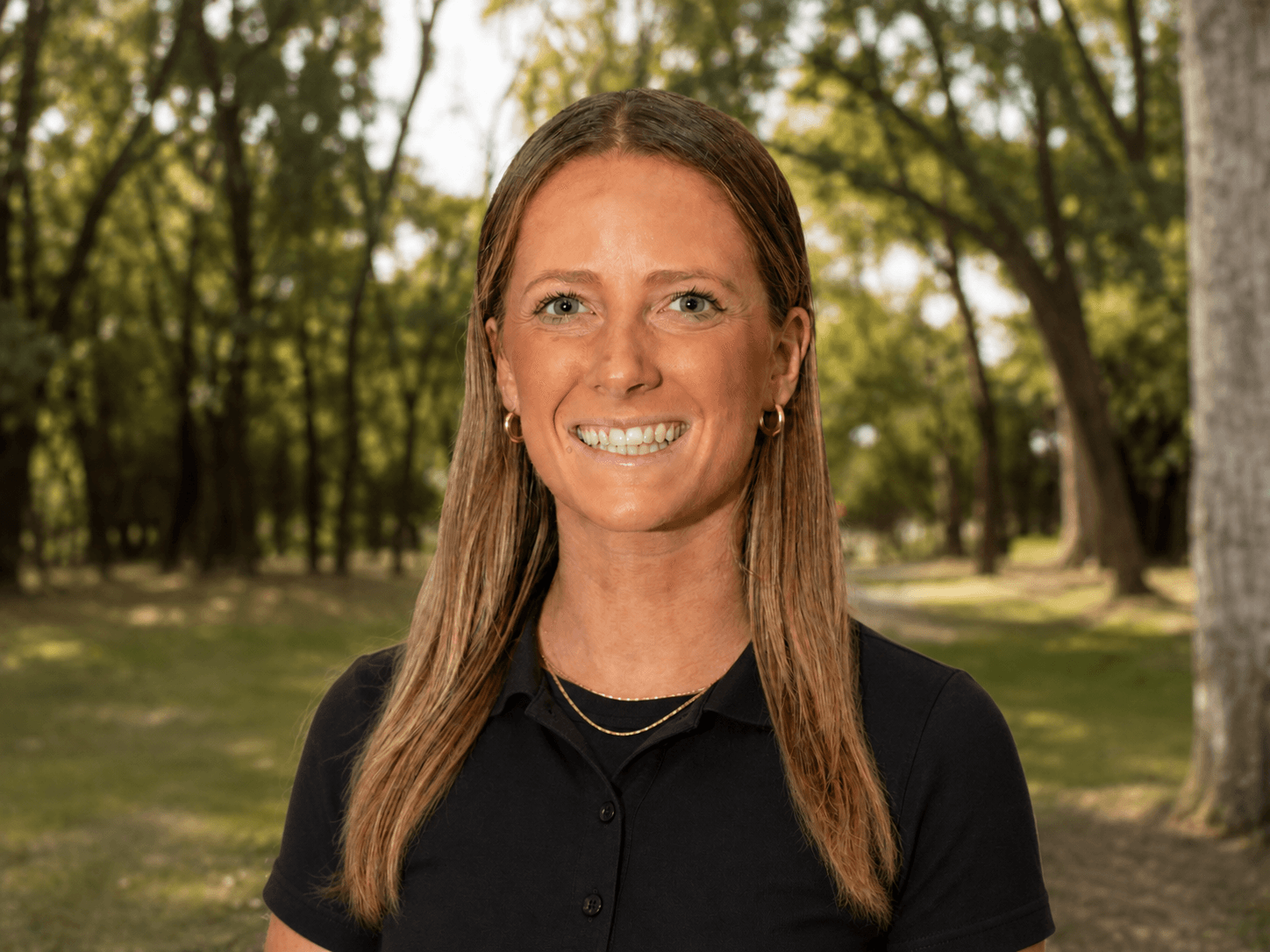
Laura
Exercise Physiologist

Judy
Exercise Physiologist
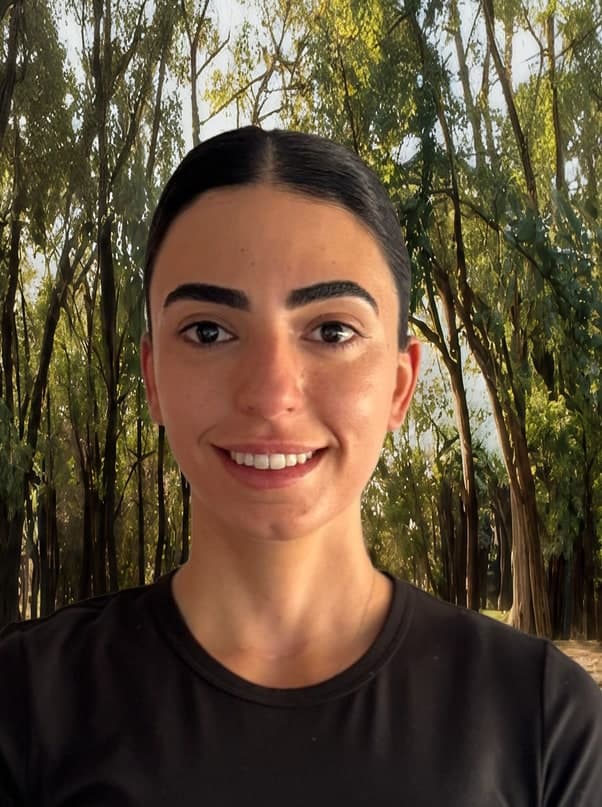
Raquel
Exercise Physiologist
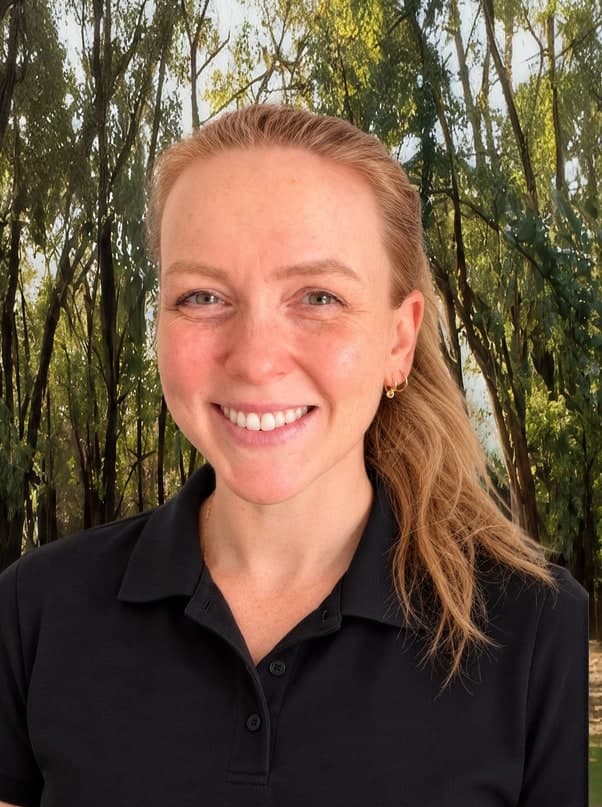
Alex
Exercise Physiologist

Alexia
Exercise Physiologist
Drift Health has worked with the NDIS community for more than 8 years, and more than 130 families have built movement, fitness and confidence with our physiotherapists and exercise physiologists.
Our mission is helping kids with autism be kids. That means sessions that feel like play, in places your child already knows.
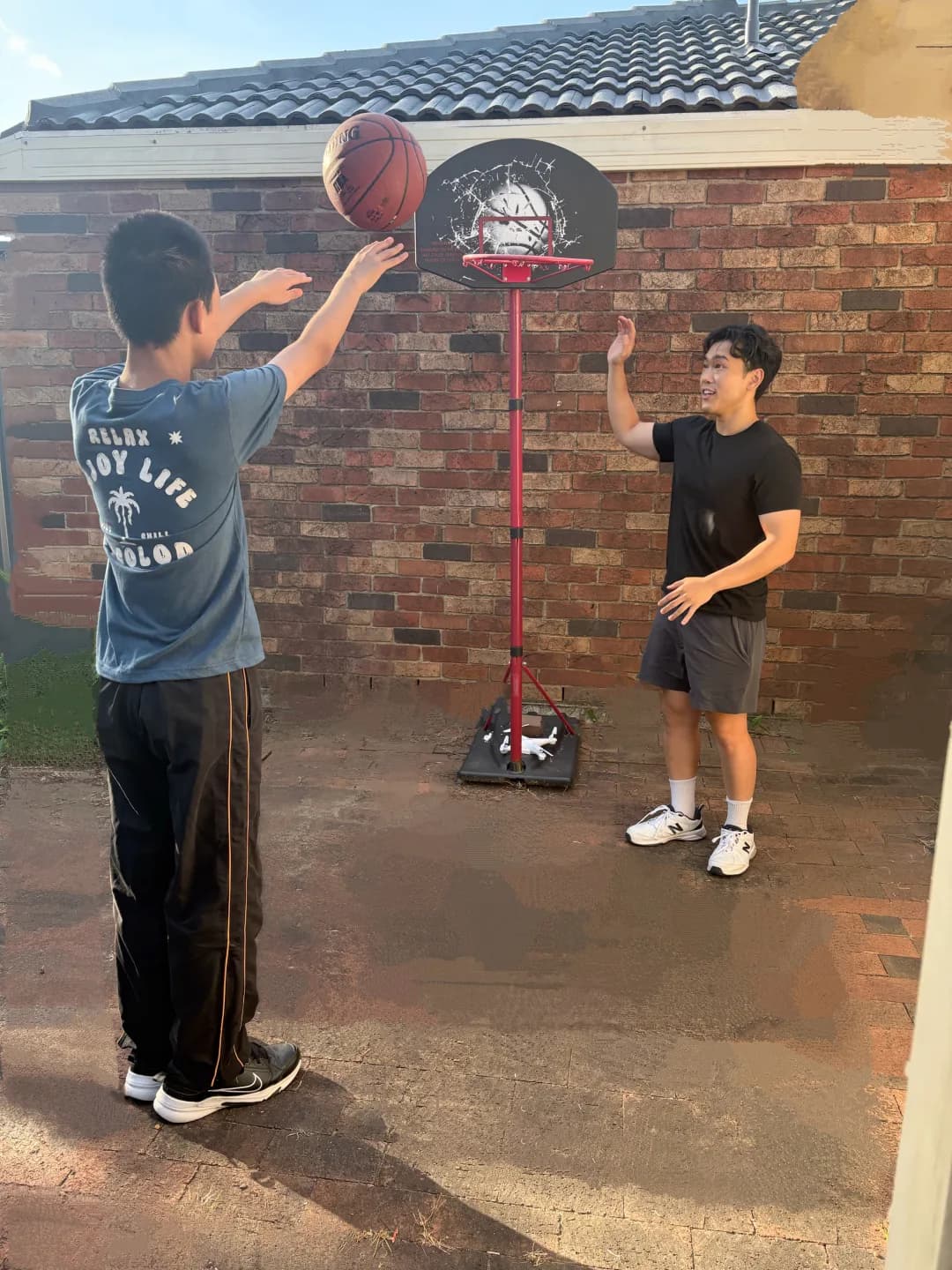
Tell us your suburb and the times that suit your family, and we'll check which physiotherapist covers your area.

Liverpool, Fairfield and Campbelltown
Blacktown, Parramatta and Penrith
Castle Hill, Kellyville and surrounding suburbs
Ashfield, Marrickville and Burwood
Sydney CBD and nearby suburbs
Miranda, Cronulla and Sutherland
Coverage depends on clinician availability, so please ask about your suburb.

Sudden pain, a new limp or skills your child has lost need a medical review first. See your GP, child and family health nurse or paediatrician, then come back to us for movement support alongside that.
Tell us how your child communicates, what helps them feel settled and what they'd rather avoid. We adapt the session, the instructions and the pace around that, and you can let us know if it isn't working.
We work with children and teenagers under 18. Tell us your child's age and what's tricky on the free call, and we'll tell you honestly whether paediatric physiotherapy is the right fit or whether another service or referral is a better starting point.
Both assess movement and use exercise. Physiotherapy suits movement difficulties that need assessment and treatment, while exercise physiology focuses on building strength, fitness and skills through planned exercise. If you're unsure, ask on the free call, or read our guide comparing the two.
Yes, it often does. Physiotherapy works on movement, balance and mobility, which can support what other therapists are doing. We're happy to share what we're working on with your team, with your say-so.
No. A GP referral isn't required, and you can contact us directly by booking a free call. If your GP, paediatrician or support coordinator would like to refer your child, they can use our referral form.
It depends on your child's plan. We work with self-managed and plan-managed NDIS plans; Drift Health isn't a registered NDIS provider, so NDIA-managed plans can't be used. Our fees are in line with the NDIS price limits, travel is charged in line with NDIS rules, and a standard session is 60 minutes, with extended sessions available. We'll quote it all before you start. Your plan manager can confirm how the funding can be used.
Tell us which movements are tricky and what you'd like your child to join in with. On a free 15‑minute call, we'll explain how the physiotherapist would assess it and shape a plan you work on together.